Reiki Scam Warnings: How to Identify Fake Chakra Balancing
Having been a Reiki Master since 2018, I sometimes get phone calls from people who are trying to figure out if a sales person who is calling themselves a chakra balancing professional really is legitimate, or is actually an energy work or Reiki scam.
Though Reiki is real, and 99.99% of chakra balancing practitioners are wonderful people who have your best interests at heart, there ARE unfortunately people out there who are using the concept of Reiki in a fake or destructive way. The good thing is that it's quite easy to identify them. Here's how.
Identifying a Reiki Scam
1. There should never be pressure or fear around Reiki.
Sometimes a (supposed) "Reiki practitioner" makes people terrified by telling them that their energy is "all messed up," and they HAVE TO do a ton of sessions in order to fix themselves and their life. This usually comes with a big price tag, as I'll explain next.
Scary statements like this are huge red flags, and are an indication to work with a different practitioner instead. Why? Reiki is about kind, loving, gentle energy flow. It is not about pressure, fear, or scare tactics. (See "Feeling Worse After Reiki" for more.)
What's the opposite of pressure-filled sales? In my studio, for example, I often offer prospective clients several other Reiki practitioners that they may want to work with instead of me. If I see on their Reiki intake form that someone else might be a better match for their path forward, I will refer them to another practitioner I trust.
As the five Reiki Principles teach, our goal is the greater good, and so being generous and non-pressured is key. "I will do my work honestly" is a core tenet.
2. Reiki isn't wildly expensive.
As I explained in "How Much Does Reiki Cost?" energy work sessions cost anywhere from $50 to $300 -- not thousands and thousands of dollars an hour. Wildly high prices are often paired with scare tactics meant to play on people's fears. If this is happening to you, please call around to other practitioners to get a second or third opinion and find a calmer, more truthful path forward.
3. Energy work is fully clothed.
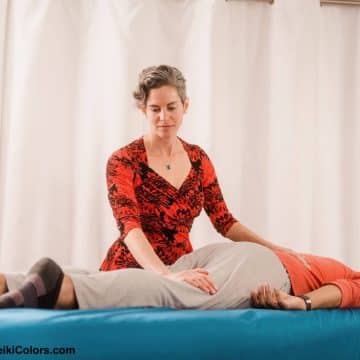
As you can see in all the Reiki images on this site, Reiki is almost always done fully clothed, so be alert if a practitioner is asking for all clothing stripped off -- especially if it's paired with pressure or fear tactics. Listen to your gut, and walk the other way if you start to feel uncomfortable. Speaking of which...
4. Your intuition will guide you away from a Reiki Scam.
In fact, Reiki is all about tapping into your inner wisdom and true energy, so the best way to know whether a Reiki practitioner is real or is trying to do a scam is to listen to your gut and intuition. If you feel uncomfortable or worried, or scared to be making requests with the person to feel better, pick another person to work with.
5. Reach out for other opinions if unsure.
If a possible scam practitioner makes you terrified that your "energy is broken," get a second, third, or fourth opinion. Call around to other energy work and life coach practitioners to get their thoughts, and also talk with people in your life that you trust, even if they are not in the energy work field.
Actual Reiki practitioners want you to feel comfortable, safe, happy, and healthy. As I explained in my Reiki practitioner cleansing article, we put great thought and effort into giving clients the best experience possible.
Avoiding a Reiki Scam, in Sum
The good news here is that it's easy to tell a Reiki scam from a kind-hearted, real practitioner who has your best interests at heart. Just follow those guidelines, and trust your gut! (Oh and pronounce Reiki "RAY-key.") What questions or comments do you have after reading this? Do share!
Want more? See my article on signs of blocked feminine energy.

The creator of this site, Lillie Marshall, is a Reiki practitioner who is certified in three different kind of energy work, including Usui and Kundalini Reiki. She began her formal training in 2018, and now runs Healing Touch "L" Reiki in Boston, where she has become one of the top-rated practitioners in Massachusetts, conducting hundreds of sessions with clients. Having been a public school teacher for many years, Lillie is passionate about writing articles to educate people far and wide about the wonderful, natural benefits of Reiki for wellbeing and balance. Find her on social media at @HealingTouchL.